
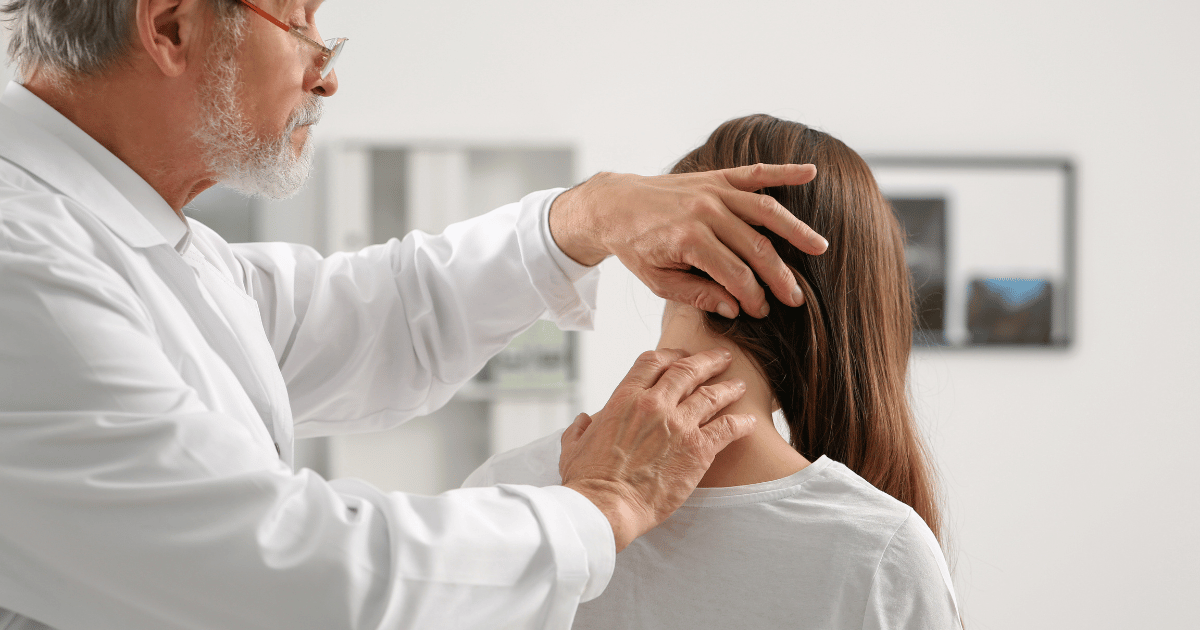
Not every headache begins in the head itself. Sometimes, pain develops because of a problem involving the cervical spine—the bones, joints, discs, muscles, and other tissues of the neck—and is felt in the head. This type of secondary headache is known as a cervicogenic headache.
Cervicogenic headaches may cause pain that starts near the base of the skull or upper neck and travels toward the forehead, temple, or area behind an eye. Neck stiffness and reduced range of motion may also occur, and certain head movements or positions can make the pain worse.
Because cervicogenic headaches can resemble migraine, tension-type headaches, and other conditions, an accurate diagnosis is important before deciding on treatment.
At Victory Spinal Care in Melbourne, Florida, our practice focuses on upper cervical chiropractic care for appropriate musculoskeletal concerns. We recognize that neck-related symptoms deserve careful assessment. While chiropractic care may be considered for selected musculoskeletal conditions, no specific treatment—including upper cervical chiropractic care—can be guaranteed to resolve every cervicogenic headache.
A cervicogenic headache is a headache caused by a disorder or problem involving the cervical spine or surrounding neck tissues. The pain is referred: the underlying source is in the neck, but the discomfort is experienced in the head.
Structures in the upper neck share nerve pathways involved in processing pain from the head. This relationship helps explain why a neck problem can sometimes produce pain that travels into the scalp, forehead, or around an eye.
A clinician does not diagnose a cervicogenic headache simply because someone has both a headache and neck pain. The assessment must consider whether there is evidence that a cervical condition is actually causing the headache.
Features that may support a cervicogenic headache diagnosis include:
These features can help guide an evaluation, but they do not confirm the diagnosis on their own.
Symptoms can vary depending on the underlying neck condition. Common features may include:
Some people may also experience light sensitivity, nausea, or other symptoms that overlap with migraine. Symptoms alone are not always enough to distinguish the different headache types, which is why a clinical assessment matters.
Cervicogenic headaches are associated with disorders or injuries involving structures in the neck that can refer pain into the head. Possible causes include:
Not every finding on a neck X-ray or MRI explains a person’s headache. Some cervical changes are common even in people without pain, so imaging results must be interpreted alongside symptoms and clinical examination findings.
Poor posture or prolonged screen use may contribute to neck discomfort for some people, but these factors alone do not establish the cause of a headache.
Several headache disorders can cause pain in similar areas. Understanding the differences helps explain why a proper diagnosis matters.
Cervicogenic Headaches
These are secondary headaches attributed to a neck disorder. Pain may travel from the neck toward the head and may be aggravated by neck movement or certain positions. A clinician looks for evidence linking the cervical condition to the headache.
Migraine
Migraine is a neurological headache disorder that may cause moderate to severe head pain, nausea, sensitivity to light or sound, and sometimes visual or other neurological symptoms. Neck pain can also occur with migraine, so neck discomfort does not automatically mean the headache is cervicogenic.
Tension-Type Headaches
Tension-type headaches often feel like pressure, tightness, or a band around the head. Neck or shoulder muscle tenderness may occur, but this does not necessarily mean the pain originates from a cervical spine disorder.
Occipital Neuralgia
Occipital neuralgia involves irritation or injury of the occipital nerves and may cause brief, sharp, shooting, or electric-shock-like pain across the back of the head or scalp. It is different from a cervicogenic headache, although the conditions can sometimes have overlapping symptoms.
If headaches are new, recurrent, worsening, or affecting daily life, a healthcare professional can help determine the likely cause and appropriate next steps.
Diagnosis typically involves a detailed medical history and physical examination. The goal is to identify whether a neck-related condition is responsible for the headache and to consider other possible causes.
A healthcare professional may:
There is no single routine test that confirms every cervicogenic headache. Imaging may identify a possible cervical problem, but a scan alone does not prove that the finding is causing the headache.
If symptoms suggest a neurological condition or another potentially serious cause, further medical assessment takes priority.
Treatment depends on the underlying cause, symptom severity, and individual health needs. A healthcare professional may recommend one or more approaches.
Physical Therapy and Exercise
A physical therapist may develop a program to improve neck mobility, strength, endurance, and movement control. Exercises are tailored to the person’s symptoms and diagnosis.
Posture and Activity Adjustments
For some people, changing workstation setup, taking regular movement breaks, or adjusting activities that aggravate symptoms may help reduce neck strain. These measures do not replace evaluation when headaches persist or worsen.
Medication
A healthcare professional may recommend medication to manage pain or treat a related condition. The appropriate option depends on the diagnosis, medical history, and other medications being taken.
Manual Therapy
Certain manual therapy approaches may be considered for selected patients. Evidence suggests that some manual therapies and exercise-based approaches can help some people with cervicogenic headaches, but results vary and no approach is suitable for everyone.
Injections or Specialist Procedures
For persistent symptoms that do not respond adequately to conservative care, a specialist may consider diagnostic nerve blocks, targeted injections, or other procedures in selected cases.
Treatment should address the identified cause rather than assuming that all headaches arise from the same neck problem.
At Victory Spinal Care in Melbourne, FL, our practice focuses on upper cervical chiropractic care, which involves evaluation and care of the upper portion of the neck.
Because cervicogenic headaches are attributed to neck-related conditions, assessment of the cervical region may be relevant when a patient has an appropriate musculoskeletal concern. However, the presence of a headache does not automatically establish an upper cervical problem, and not every headache originates in the neck.
Our approach begins with understanding your symptoms and determining whether your concerns fall within the scope of our services. When appropriate, an upper cervical evaluation may include a review of your health history, neck symptoms, movement, and other relevant findings.
Upper cervical chiropractic care should not be presented as a guaranteed cure for cervicogenic headaches. Evidence for manual and chiropractic approaches varies, and the most appropriate care depends on the individual diagnosis. If symptoms suggest migraine, another neurological condition, or a more serious cause, medical assessment or referral should take priority.
If your symptoms are consistent with a musculoskeletal concern that falls within our scope of practice, our team can discuss appropriate care options and their limitations. We encourage patients with persistent, unexplained, or worsening headaches to seek medical evaluation rather than assuming the neck is responsible.
Our goal is to provide transparent information and help patients make informed decisions about their care.
Q. What does a cervicogenic headache feel like?
A. A cervicogenic headache often begins near the neck or base of the skull and travels toward the forehead, temple, or area behind an eye. It may occur mainly on one side and may worsen with certain neck movements or positions. Symptoms vary, so a clinical assessment is needed to identify the cause.
Q. Can neck problems cause headaches?
A. Yes. Certain cervical spine or soft-tissue conditions can refer pain into the head and cause cervicogenic headaches. However, neck pain and headaches can also occur together for other reasons, including migraine. A healthcare professional can assess whether a neck condition is actually responsible.
Q. How are cervicogenic headaches different from migraines?
A. Cervicogenic headaches are attributed to a neck-related disorder, while migraine is a neurological headache disorder. Cervicogenic pain may be linked to neck movement and reduced range of motion. Migraine may involve nausea and sensitivity to light or sound, although symptoms can overlap and neck pain can occur with migraine.
Q. Can upper cervical chiropractic care help cervicogenic headaches?
A. Upper cervical chiropractic care may be considered for selected neck-related musculoskeletal concerns, but it cannot be guaranteed to resolve cervicogenic headaches. Evidence varies across manual therapy approaches, and treatment should depend on an appropriate assessment and diagnosis. Seek medical evaluation for new, persistent, or worsening headaches.
Q. Can poor posture cause cervicogenic headaches?
A. Prolonged positions or poor workstation ergonomics may contribute to neck discomfort in some people, but posture alone does not establish that a headache is cervicogenic. Diagnosis requires evidence linking a cervical condition to the headache. Activity adjustments may be helpful as part of an individualized plan.
Q. When should I seek medical care for a headache?
A. Seek emergency care for a sudden, severe headache that reaches maximum intensity quickly, or a headache accompanied by weakness, numbness, confusion, difficulty speaking, fainting, fever with a stiff neck, or sudden vision changes. A new headache after a significant head or neck injury also needs prompt assessment. Consult a healthcare professional for headaches that persist, recur, or worsen.
Headaches can have several possible causes, and identifying the source is an important step toward choosing appropriate care. If you experience recurring headaches alongside neck discomfort or restricted movement, a healthcare professional can help determine whether a cervical condition may be contributing.
Victory Spinal Care provides upper cervical chiropractic services for appropriate musculoskeletal concerns in Melbourne, Florida. We can discuss whether an upper cervical evaluation may be suitable for your specific situation, while recognizing that headaches may require medical assessment or other treatment.
Victory Spinal Care — Melbourne, Florida
301 W Fee Ave
Melbourne, FL 32901
Phone: (321) 288-1455
Serving Melbourne, Palm Bay, Viera, Suntree, West Melbourne, and surrounding Brevard County communities.
Contact us to learn more about our upper cervical chiropractic services.
Victory Spinal Care provides personalized upper cervical chiropractic care in Melbourne, Florida. Dr. Javier Canales-Díaz is committed to helping patients understand their spinal health and explore appropriate care options.
Service Areas: Melbourne, Palm Bay, Viera, Suntree, West Melbourne, and surrounding communities in Brevard County, Florida.
Copyright 2016-2025 Victory Spinal Care. All Rights Reserved.