
Neck pain can make ordinary activities surprisingly difficult. Turning your head while driving, working at a computer, looking down at your phone, or finding a comfortable sleeping position may become uncomfortable when your neck feels stiff or sore.
For some people, the discomfort stays around the neck and shoulders. For others, it may be accompanied by headaches, pain traveling into an arm, or tingling in the fingers.
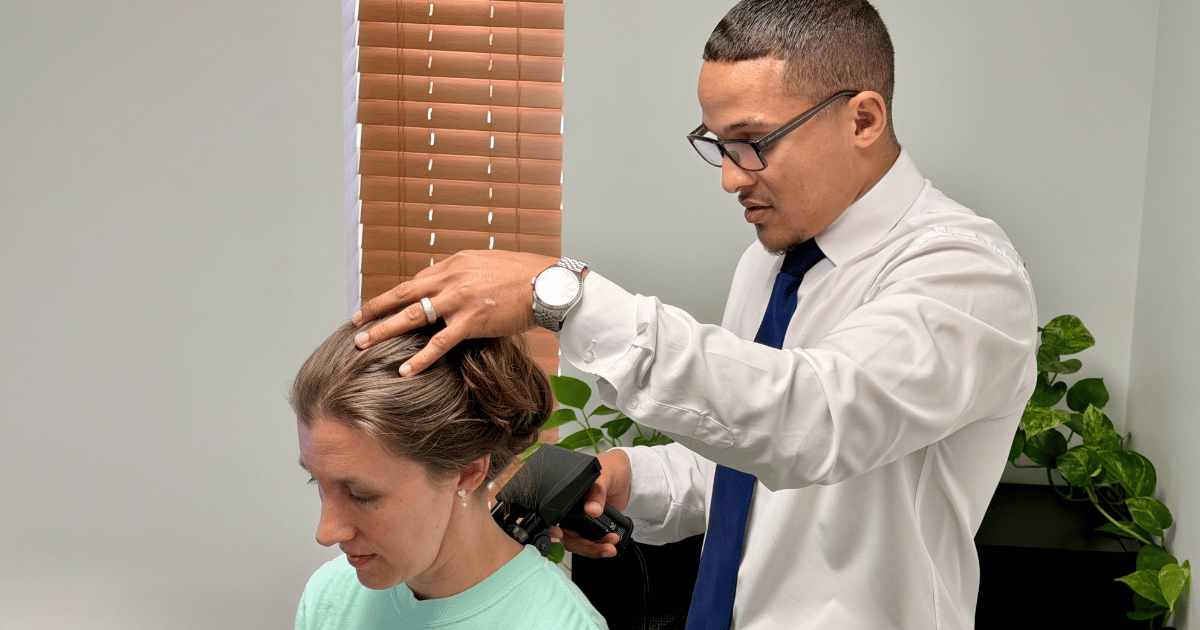
At Victory Spinal Care in Melbourne, Florida, Dr. Javier Canales-Díaz, D.C., specializes in upper cervical chiropractic care, which focuses on the upper portion of the neck. Understanding your symptoms, their possible causes, and whether this approach may be appropriate is an important first step toward making an informed care decision.
Neck discomfort can develop suddenly or gradually. Symptoms depend on the underlying cause and may include:
The location and pattern of your symptoms can offer useful clues, but they do not establish a diagnosis by themselves.
Neck pain has several possible causes. Identifying the likely source matters because muscle strain, joint problems, nerve compression, and injuries may require different approaches.
Muscle strain and prolonged positioning
Spending long periods at a desk, looking down at a phone, or repeatedly performing the same movements can place strain on the muscles and other tissues supporting your neck.
Joint and age-related changes
The joints and discs in the cervical spine can change over time. Conditions such as cervical osteoarthritis may contribute to stiffness, pain, and reduced movement.
Nerve irritation or compression
A bulging or herniated disc, bone spur, or narrowing around a nerve may irritate a nerve root in the neck. Symptoms can travel into the shoulder, arm, or hand and may include tingling, numbness, or weakness.
Injuries
Falls, sports injuries, and motor vehicle accidents can affect the muscles, ligaments, joints, and other structures of the neck. Whiplash is one example of a neck injury that may cause pain and restricted movement.
Other medical conditions
Infections, inflammatory conditions, and other health problems can sometimes cause neck pain. Severe or unusual symptoms should not automatically be attributed to posture or spinal mechanics.
The neck and head work together during everyday movements, and certain neck conditions can contribute to headaches. This is particularly relevant when pain begins around the upper neck or base of the skull and changes with neck movement.
However, neck discomfort can also occur alongside migraine and tension-type headaches without being their primary cause. A headache should not automatically be treated as a neck problem simply because the neck feels tight.
If you experience both symptoms, explore our page on Cervicogenic Headaches to learn more about headaches associated with the neck.
The upper cervical region is the uppermost portion of the neck, where the skull meets the top two cervical vertebrae. Upper cervical chiropractic care focuses specifically on this area rather than treating every part of the spine in the same way.
At Victory Spinal Care, Dr. Javier Canales-Díaz, D.C., specializes in this focused approach. If you are considering care for neck discomfort, the important question is whether your symptoms and health history make this approach appropriate.
Your concerns may be discussed in relation to:
Research suggests that spinal manipulation or mobilization may help some people with neck pain, but the evidence varies. Findings about spinal manipulation in general do not establish that every upper cervical technique is effective for every neck condition.
Upper cervical chiropractic care is not a universal solution for neck pain, and results cannot be guaranteed. If your symptoms suggest an injury, significant nerve compression, or another medical condition, further evaluation may be needed before chiropractic care is considered.
While the right approach depends on the cause of your symptoms, a few practical adjustments may help reduce strain during daily activities.
Bring screens closer to eye level. Avoid repeatedly bending your head forward to view a phone or monitor.
Take movement breaks. If you work at a desk or drive for long periods, change positions regularly and move gently within a comfortable range.
Pay attention to sleeping comfort. Choose a pillow and sleeping position that allow your neck to rest comfortably, rather than forcing it into an awkward angle.
Avoid pushing through sharp pain. Gentle movement may be appropriate for many uncomplicated cases, but stop activities that significantly worsen your symptoms.
Get persistent symptoms checked. Neck pain that continues, worsens, or begins spreading into your arm deserves attention, especially when accompanied by numbness or weakness.
These measures may help with everyday strain, but they are not a substitute for evaluation when symptoms are persistent or concerning.
Most neck pain is not caused by a life-threatening condition, but some symptoms require prompt attention.
Seek emergency medical care for severe neck pain following a significant injury, such as a car accident or serious fall. Emergency evaluation is also important if neck pain occurs with sudden arm or leg weakness, difficulty walking, new loss of coordination, or other neurological symptoms.
A severe headache with fever and a stiff neck also requires urgent medical assessment. Sudden neck pain accompanied by facial drooping, difficulty speaking, vision changes, or other possible stroke symptoms is an emergency.
Arrange a medical evaluation if your pain is persistent, severe, worsening, radiates into an arm, or comes with tingling, numbness, or weakness.
Do not delay appropriate medical assessment to try chiropractic care. Neck treatment should be considered only after relevant risks and contraindications have been assessed.
Q. What is the most common cause of neck pain?
A. Muscle strain and prolonged positioning are common causes. Looking down at a phone, working at a computer for extended periods, or repeatedly performing the same movements can contribute. However, joint changes, injuries, nerve compression, and other medical conditions can also cause neck pain.
Q. Can upper cervical chiropractic care help with neck pain?
A. Spinal manipulation or mobilization may help some people with neck pain, but results vary and the evidence differs by technique and condition. Victory Spinal Care specializes in upper cervical chiropractic care. Whether this approach is appropriate depends on your symptoms, health history, and individual risks.
Q. Can neck pain cause headaches?
A. Certain neck conditions can cause cervicogenic headaches, in which the pain originates from structures in the neck. Other headache disorders, including migraine, may also occur with neck discomfort. An evaluation can help determine whether a neck-related component may be involved.
Q. What does it mean if neck pain travels into my arm?
A. Pain traveling from the neck into the shoulder, arm, or hand may indicate irritation or compression of a nerve root. Tingling, numbness, or weakness can also occur. Persistent or worsening symptoms should be medically evaluated rather than assumed to be a simple muscle strain.
Q. Is upper cervical chiropractic care suitable for everyone with neck pain?
A. No. The suitability of chiropractic care depends on the cause of the pain, your medical history, and potential risks. Recent significant injuries, certain underlying conditions, and neurological warning signs may require medical evaluation before any neck treatment is considered.
Q. When should I seek care for neck pain?
A. Seek medical evaluation if pain is severe, persistent, worsening, or spreading into your arms, especially if accompanied by tingling, numbness, or weakness. Severe pain after an injury, new difficulty walking, sudden weakness, or a severe headache with fever and neck stiffness requires urgent or emergency assessment.
Neck pain can affect how you work, sleep, drive, and move throughout the day. Understanding what may be contributing to your discomfort can help you decide which care options are worth exploring.
Victory Spinal Care specializes in upper cervical chiropractic care at our Melbourne, Florida, practice. If you are experiencing neck discomfort and would like to learn whether our approach may be appropriate for your situation, contact our office to discuss the services we offer.
Victory Spinal Care
301 W Fee Ave, Melbourne, FL 32901
Phone: (321) 288-1455
Serving Melbourne, Palm Bay, Viera, Suntree, West Melbourne, and surrounding Brevard County communities.
Victory Spinal Care provides personalized upper cervical chiropractic care in Melbourne, Florida. Dr. Javier Canales-Díaz is committed to helping patients understand their spinal health and explore appropriate care options.
Service Areas: Melbourne, Palm Bay, Viera, Suntree, West Melbourne, and surrounding communities in Brevard County, Florida.
Copyright 2016-2025 Victory Spinal Care. All Rights Reserved.