
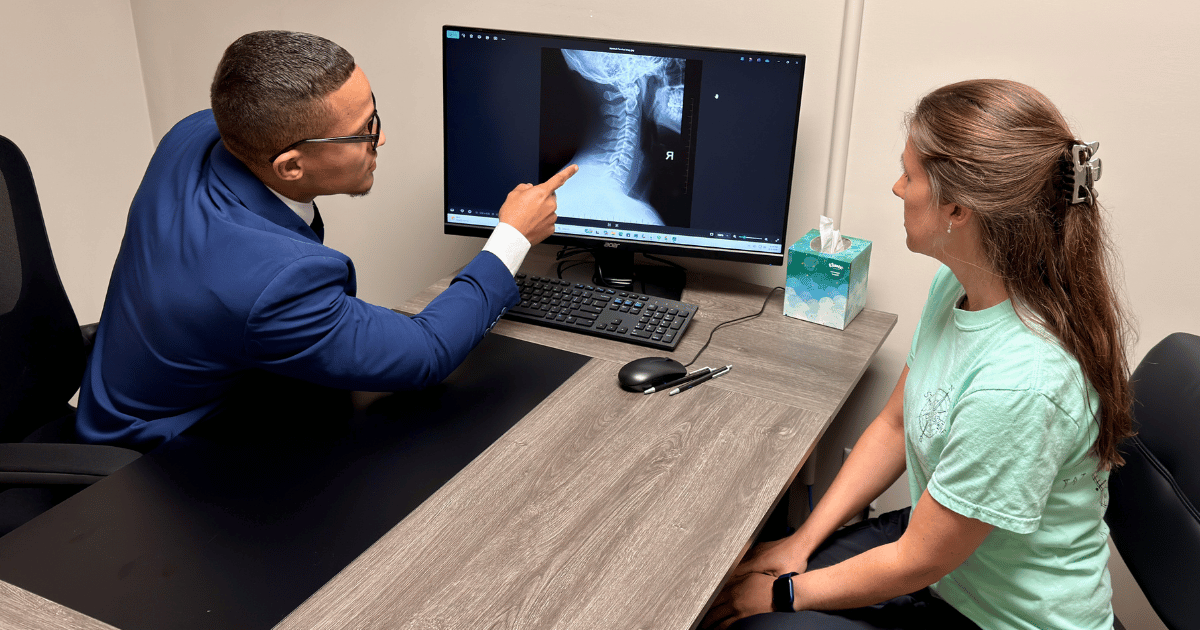
The way you sit, stand, and move can influence how comfortable you feel during everyday activities. Long periods in one position, repetitive tasks, work habits, and individual movement patterns may affect how your body feels throughout the day.
At Victory Spinal Care in Melbourne, Florida, a postural examination can be part of an individualized evaluation to help assess body positioning and relevant movement patterns.
A postural examination may help identify areas for further assessment and provide information that can be considered alongside your health history, symptoms, and physical examination. However, posture varies naturally from person to person, and there is no single perfect posture that everyone must maintain.
The purpose of an assessment is to better understand your individual needs—not to label normal differences in posture as defects or assume that posture alone explains your symptoms.
A postural examination is an assessment of how your body is positioned while sitting, standing, or performing selected movements. Depending on the examination, a healthcare professional may observe the position of your head, shoulders, spine, pelvis, and other body regions.
The assessment may also consider movement, range of motion, and whether particular positions are associated with discomfort or difficulty performing daily activities.
For patients considering upper cervical chiropractic care, a postural examination may provide additional information about head and neck positioning as part of a broader evaluation.
Posture is only one part of the clinical picture. A visual assessment cannot independently diagnose a spinal condition, identify the cause of every type of pain, or establish that a particular chiropractic adjustment is necessary.
People seek posture assessments for different reasons. Some want to understand their body positioning, while others have concerns about neck discomfort, back pain, stiffness, or difficulty maintaining comfortable positions during daily activities.
Depending on your needs, a postural examination may help with the following.
Understanding Head and Neck Positioning
The position of your head and neck may be observed during sitting or standing. This can be relevant when discussing neck discomfort, movement habits, or activities that involve prolonged screen use.
Observing Shoulder and Spinal Positioning
A practitioner may look at the position of your shoulders and the visible curves of your spine. These observations can help guide further assessment when relevant to your symptoms or goals.
Exploring Movement and Comfort
Posture is not limited to standing still. Observing how you move between positions may help identify movements or activities that feel uncomfortable or restricted.
Supporting Individualized Care Planning
Postural observations may contribute to a broader discussion about your concerns and possible care options. Recommendations should also consider your health history, symptoms, physical findings, and personal goals.
A postural examination does not guarantee that a particular posture is causing pain or that changing it will resolve symptoms. The findings should be interpreted carefully and in context.
The exact process depends on your concerns and the assessment methods used at Victory Spinal Care. A postural examination may include several steps.
1. Discussing Your Concerns
Your practitioner may ask about your symptoms, daily activities, work environment, previous injuries, and any difficulties you experience when sitting, standing, or moving.
This information helps put the assessment into context.
2. Observing Your Posture
You may be asked to stand or sit in a comfortable position while the practitioner observes relevant areas of your body. Depending on the assessment, this may include the head, shoulders, spine, and pelvis.
Natural differences between the left and right sides of the body are common and do not automatically indicate a problem.
3. Assessing Selected Movements
If appropriate, the practitioner may ask you to perform simple movements or change positions to observe your range of motion and comfort.
The assessment should be tailored to your abilities and symptoms rather than requiring you to force a position that causes significant discomfort.
4. Discussing the Findings
Your practitioner can explain what was observed, what the findings may mean, and what they cannot establish on their own.
If your symptoms suggest a condition that requires further evaluation, an additional examination or referral may be appropriate.
5. Reviewing Possible Next Steps
Depending on the findings, your practitioner may discuss relevant care options, movement considerations, or whether another healthcare professional should assess your symptoms.
Recommendations should be based on your individual circumstances rather than a standardized posture score alone.
A postural examination can provide observations about body positioning and movement, but it has important limitations.
Depending on the methods used, it may help describe:
However, posture alone cannot establish the cause of neck pain, back pain, headaches, dizziness, or neurological symptoms.
It also cannot reliably determine whether a vertebra is misaligned in a clinically meaningful way or whether an adjustment is required.
If your symptoms suggest an underlying medical condition, your healthcare provider may recommend a more detailed physical examination, diagnostic testing, or referral. Imaging is not automatically necessary simply because a posture assessment identifies an asymmetry.
No. Human bodies naturally differ in shape, spinal curvature, flexibility, and preferred resting positions. There is no single posture that everyone must maintain throughout the day.
Some positions may aggravate symptoms for certain individuals, particularly when maintained for long periods without changing position. However, a visible postural difference does not necessarily mean that something is damaged or that a person will develop pain.
For many people, changing positions regularly, staying physically active, and finding comfortable ways to sit, stand, and move are more useful goals than trying to hold a rigidly perfect posture.
If you experience persistent pain or restricted movement, a professional assessment can help determine whether posture is relevant to your symptoms or whether another cause needs to be investigated.
Victory Spinal Care in Melbourne, Florida, provides upper cervical chiropractic care and related examination services under the care of Dr. Javier Canales-Díaz, D.C.
A postural examination may be considered as part of an individualized assessment when relevant to a patient’s concerns and clinical needs.
The goal is to help you better understand your body positioning, discuss any movement-related concerns, and consider appropriate next steps. Postural observations should be interpreted alongside your health history and other relevant examination findings.
If you would like to learn more about the postural examination offered at Victory Spinal Care, contact the practice to ask what the assessment includes and how the findings may be used in your care planning.
Serving Melbourne, Palm Bay, Viera, Suntree, West Melbourne, and surrounding Brevard County communities.
Q. What happens during a postural examination?
A. A postural examination typically involves observing how you sit, stand, and possibly move through selected positions. Depending on your concerns, the practitioner may assess head and neck positioning, shoulder alignment, visible spinal curves, and movement comfort.
Q. Can poor posture cause neck pain or back pain?
A. Posture may influence comfort for some people, especially when certain positions are maintained for extended periods. However, research does not support the idea that one universal posture prevents pain or that every postural variation causes symptoms. Pain can have multiple contributing factors.
Q. Can a postural examination detect a spinal misalignment?
A. A visual postural examination can identify observable differences in body positioning, but it cannot independently diagnose a spinal condition or establish that a vertebra is misaligned in a way that requires treatment. Further evaluation may be appropriate depending on your symptoms and findings.
Q. Do I need a postural examination before receiving upper cervical chiropractic care?
A. Not necessarily. The appropriate assessment depends on your health history, symptoms, and the practitioner’s clinical approach. A postural examination may be one component of an evaluation, but it should not automatically be required for every patient.
Q. Can improving my posture eliminate headaches or dizziness?
A. Not necessarily. Headaches and dizziness can have many causes, including conditions that require medical assessment. Although neck movement and positioning may be relevant in some cases, a posture assessment cannot establish the cause of these symptoms or guarantee that changing posture will resolve them.
Q. How often should I have my posture assessed?
A. There is no universal schedule for postural examinations. Whether a reassessment is useful depends on your concerns, goals, and clinical circumstances. Ask your practitioner what the assessment is intended to measure and how any changes would influence your care.
If you have questions about your posture, neck positioning, or movement-related discomfort, Victory Spinal Care can provide information about its examination services and appointment process.
Contact our Melbourne office to learn more about the postural examination and discuss whether an evaluation may be appropriate for your situation.
Call Victory Spinal Care at (321) 288-1455.
Victory Spinal Care
301 W Fee Ave, Melbourne, FL 32901
Serving Melbourne and surrounding Brevard County communities.
Victory Spinal Care provides personalized upper cervical chiropractic care in Melbourne, Florida. Dr. Javier Canales-Díaz is committed to helping patients understand their spinal health and explore appropriate care options.
Service Areas: Melbourne, Palm Bay, Viera, Suntree, West Melbourne, and surrounding communities in Brevard County, Florida.
Copyright 2016-2025 Victory Spinal Care. All Rights Reserved.